ServicesExit Readiness Assessment
Bedford, TX Exit Readiness Assessment for Owners
We review your company through the eyes of a buyer, lender or successor: the financial records, how much rests on you, customer concentration, contracts and the strength of your managers. A written scorecard shows what is ready, what would lower the price and which fix comes first.
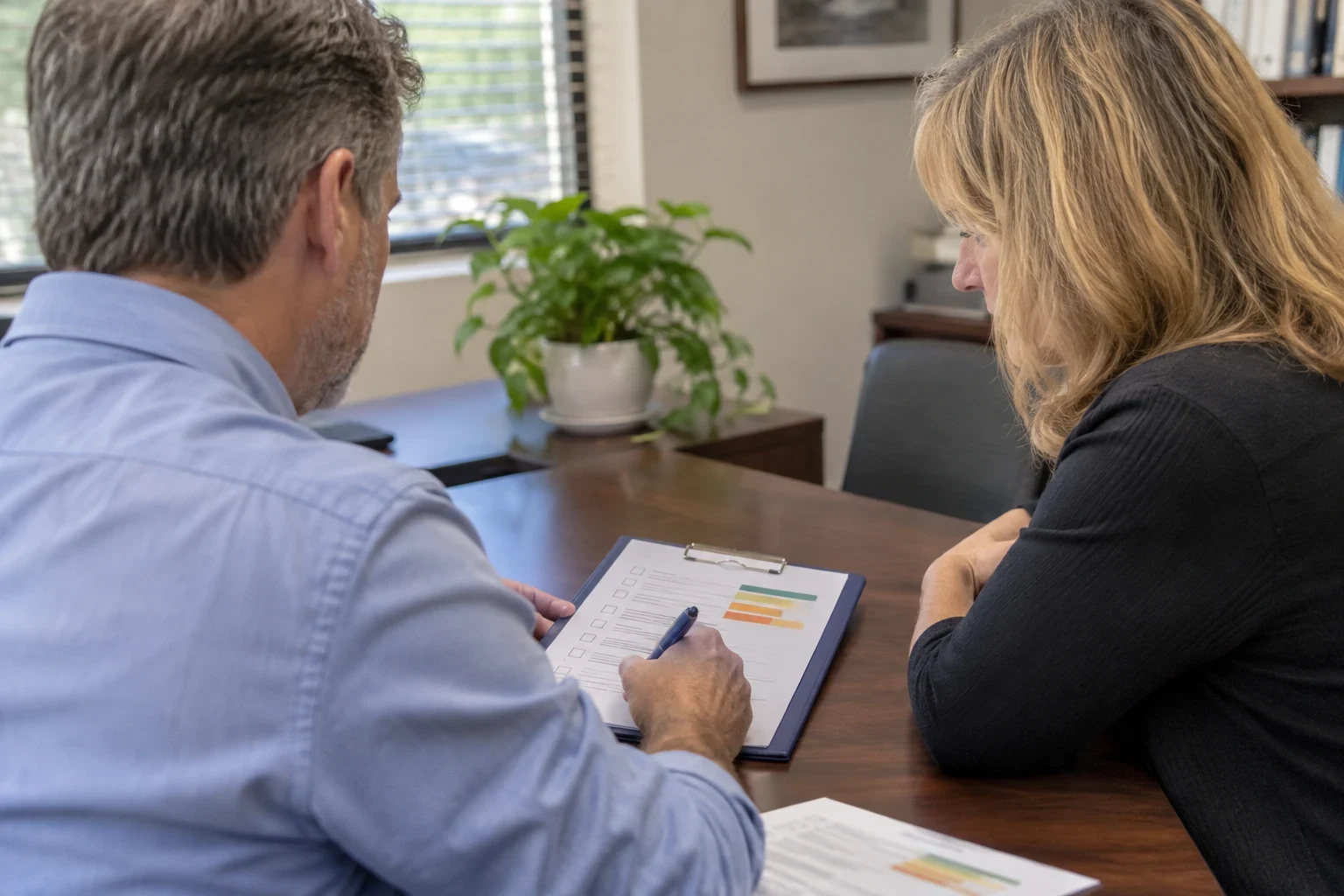
What an exit readiness assessment measures
An exit readiness assessment is a structured review of how transferable your business is today. It is not the same as a valuation, though the two work well together. A business valuation estimates what the company is worth. The assessment explains why a buyer would pay more or less than that number, and which issues would surface in due diligence.
Readiness depends on the exit route, and each route has trade-offs. A sale to an outside buyer puts weight on clean, well-supported financials and recurring revenue. A transfer to family leans on gift and estate tax structure and on whether the next generation can actually run operations. An employee or management buyout depends on cash flow strong enough to carry seller financing or a bank note. We score your company against the route you are leaning toward and show how it would look under the others.
The assessment is most useful a few years before you plan to leave. Fixes like documenting processes, moving customer relationships to a manager or reducing reliance on one large account take time to show up in the numbers a buyer reads.
Areas the assessment covers
Your financial records
We go through three years of tax returns, P&L statements and balance sheets, marking what a buyer's accountant will challenge: personal costs paid by the company, uneven revenue recognition, rent paid to related parties and add-backs without documents.
How much rests on you
We trace which customer ties, supplier terms and day-to-day calls go through you alone. Heavy reliance on the owner often leads buyers to cut an offer or move more of the price into an earnout paid later.
Revenue mix and customer concentration
We calculate the share of revenue from your biggest accounts and how much is contracted versus repeat business by habit. Recurring revenue on paper carries over to a new owner. Revenue built on a handshake often does not.
Contracts, leases and legal details
We review assignment clauses, lease terms, entity setup, who owns trade names and software, and any buy-sell agreement between partners. A lease you cannot assign can hold up a sale near the finish.
Strength of your managers
We check for a second tier of managers, written processes and a reason for key staff to stay through the handoff. Buyers pay more for a company that runs without the founder.
Your own readiness
We consider what you need from the sale, your timing and your plans afterward. A deal can look fine on paper and still let you down if what you keep after taxes falls short.

Signs it is time for a readiness check
- An offer showed up unasked
- A letter from a competitor or private equity group is a good reason to learn where you stand before you reply. The assessment shows what that buyer will find, so you can judge the offer on facts.
- The company slows when you take a week off
- If orders, pricing calls or key accounts wait for you, a buyer sees risk. That risk usually comes off the price.
- One customer carries a large share of revenue
- Concentration is one of the first things a buyer's analyst calculates. Knowing your exposure early gives you time to spread it out.
- Your books are built for taxes, not a sale
- Cash-basis returns designed to minimize tax often understate earnings. Rebuilding them to show true cash flow is easier before a deal than during one.
- Partners want different timelines
- When one owner wants out in two years and another wants ten, an unfunded or outdated buy-sell agreement becomes a real problem. We show where the gaps are.
How the assessment runs
- 1
A confidential first call
We start by phone with a free business valuation and a conversation about your goals and likely exit route. There is no pressure, and no obligation to sell.
- 2
Document gathering
We give you a specific list: tax returns, financial statements, a customer revenue summary with names removed if you prefer, an org chart, key contracts and your lease. You share only what we need to score each area.
- 3
Working session with the owner
We meet at our office or by video and walk through how the company actually runs. This is where we learn what the documents do not show, such as which relationships live only in your phone.
- 4
Written scorecard and findings
Each area gets a score, a short explanation of why, and a ranked list of fixes by likely effect on value. From there you can move into value enhancement planning or a full exit plan, or simply keep the report and act on it yourself.
What affects the cost of an assessment
We quote the fee by phone once we understand your company, and the quote covers the full scope we agreed on. The price moves with how much there is to review and how much of it needs rebuilding. Here is what drives it.
- Size and structure
- A single-entity company with one location takes less time than a group with several entities, intercompany transactions and multiple sites.
- Condition of your records
- Reviewed or audited statements go quickly. Cash-basis books with mixed personal expenses need more reconstruction before we can score them.
- Number of owners
- Each partner or family shareholder adds an interview and often a buy-sell agreement to review, because each may have different goals for the exit.
- Exit routes compared
- Scoring against one route is simpler than comparing a third-party sale, a family transfer and a management buyout side by side.
Common questions about the readiness assessment
- What separates this from a business valuation?
- A valuation hands you a figure. The assessment shows what drives that figure and where it is weak, for example owner dependence or thin contracts. Plenty of owners get the free valuation first, then use the assessment to learn what would push it higher.
- Could my staff or customers hear about it?
- No. Everything stays confidential, and we meet at our office or by phone and video, not at your business. Bringing in a key manager is your call, and we can help you plan how to do it.
- Am I committed to selling once it is done?
- No. The scorecard belongs to you, and nobody will steer you into a deal or lock you into one. Many owners just work through the findings and run a stronger company that is easier to hand over for several years before they pick any exit route.
- How much time does it take?
- Timing depends mostly on how quickly your records come together. Owners with organized books and up-to-date contracts finish faster. After we learn how your books are kept and how many owners there are, we give you a straight estimate on that first call.
- What happens if I score poorly?
- Poor scores are common and helpful, since each one names a concrete fix. We rank the fixes by likely effect on value and by effort, and the bigger ones often form the heart of value enhancement planning.
See your company the way a buyer will
Start with a short, confidential conversation about your goals and where your company stands. You will leave knowing whether an assessment makes sense now or later.